
Shunts

ABOUT SHUNTS
As a board-certified expert in the field of retinal diseases, Dr. Kaushal offers various treatment options, including those for glaucoma. Shunts are one of the most common treatments when a previous trabeculectomy may have failed.
Shunts are narrow, pliable, plastic tubes that are used during tube-shunt surgery to drain the eye of fluid known as aqueous humor, which may be causing increased pressure in the eye (intraocular pressure). Aqueous humor is the fluid that gives the eye its formation, but when cells and tissues from the retina or other areas of the eye enter the fluid, vision problems can occur. The liquid can be drained through the shunt in order to improve central vision and vision acuity, as well as to decrease the existence of floaters. In some cases, shunt surgery may also be able to treat scar tissue on the eye caused by preceding surgeries.
WHAT TO EXPECT WITH SHUNTS
Tube-shunt surgery is an outpatient procedure done under either a local anesthetic or general anesthesia. Foregoing surgery, patients may need to receive antibiotic injections to decrease the risk of infection. Shunt tubes are made of materials safe for the body, such as silicone or polypropylene. The shunt is placed into the eye with an attached tube. The tube is positioned to the front of the eye and the shunt is positioned on the eyeball, covered by the eyelid. The fluid that is retrieved is absorbed into the eyes’ veins and departs through the eye cavity.
SHUNTS AFTER TREATMENT
Though it is typically done as an outpatient procedure, younger patients may need to stay overnight depending on the surgeon’s recommendation. Following the surgery, the patient will be given antibiotics, either administered directly onto the eye or injected under the lining of the eyelid. The eyelid will be taped shut with a protective shield placed over the eye. A follow-up appointment will typically be required the day after the procedure, and continuous appointments may be required up to once a week.
In order to help decrease swelling of the eye, corticosteroid medications will need to be applied for 1 – 2 months after surgery. The patient will also need to avoid any added pressure on the eye until fully healed or advised by Dr. Kaushal.
LEARN MORE ABOUT SHUNTS
Tube-shunt surgery has proven to be successful for about 50% of patients, and can help decrease pressure in the eyes in order to eradicate the onset of vision loss and blindness. It has been shown to be safe and successful for most patients affected by glaucoma and other eye diseases. If you have any inquiries or would like to book your consultation, call our office today.
Locations
Inverness Location
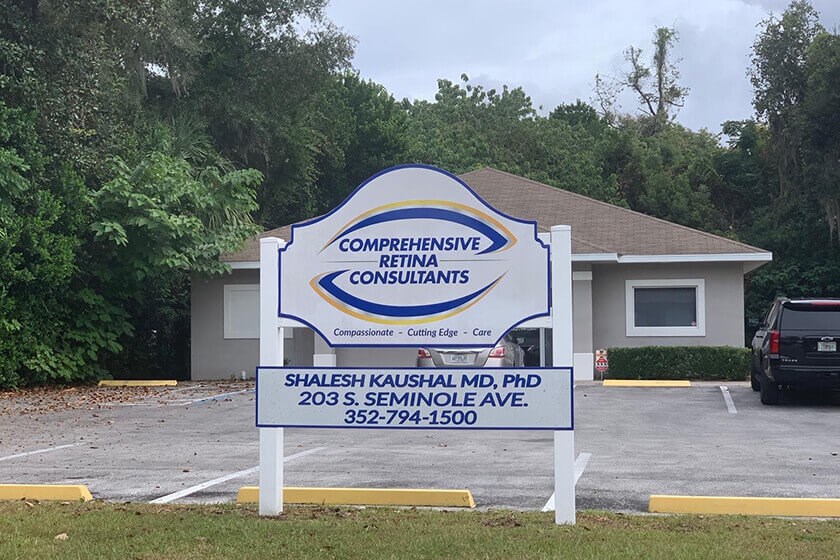
203 South Seminole Avenue
Inverness, FL 34452
(352) 794-1500


Please fill out this form and we will get you scheduled.
What Our Patients Are Saying
★★★★★
“Dr. Kaushal is highly knowledgeable and personable. I have trusted my vision to his excellent care for many years.”
B.B.
★★★★★
“He is the best there is. He has treated me for almost a year. I don’t mind waiting when I have the best doctor and he is working to help his patients.”
S.T
★★★★★
“If you have an eye condition and want to preserve the vision you have, then Dr. Kaushal and his staff are the best you can find.”
S.T

Expert Care for the Health of Your Retina
If you are seeking a retina specialist to diagnose and treat your retinal condition, we invite you to browse our reviews and read about what our patients have to say about Dr. Kaushal, our staff, and our advanced treatments.