
Nutritional Biochemistry

ABOUT NUTRITIONAL BIOCHEMISTRY
The retina is a thin, diaphanous structure that is no thicker than tissue paper attached to the inner wall of the back of the eye. It is the photographic film of the eye and is a laminated, integrated circuit that subserves all aspects of visual perception including high resolution central acuity, motion detection, edge identification, contrast sensitivity, color identification, and peripheral vision. It has at least nine identifiable structural layers with at least 15 different cell types that carry out important metabolic functions. The maintenance of the structural and functional integrity of this highly organized tissue demands significant biological energy.
PHOTORECEPTORS & THEIR ROLES
There are two major light-absorbing photoreceptor cells in humans. The rod cells mediate peripheral and dim light vision and contain the visual pigment protein rhodopsin. These photoreceptors are found in large numbers in the peripheral retina, but their highest density is in a circumferential distribution around the macula — the central region of the retina. The cone cells are important for color vision and high acuity central vision and are found predominantly in the macula. In the human body, the retina is the most metabolically active tissue per unit weight and the eye has the largest blood supply per unit weight.
Because of this unique biochemistry and vascularity, the retina is a unique barometer of overall health and nutrition. Thus, nearly every human disease has a retinal manifestation.
IMPORTANCE OF OCULAR HEALTH
It has become evident that to optimize vision, the overall health of the patient must be understood and improved. So, it is important to evaluate the blood work of most patients with retinal diseases since it’s a snapshot of the current state of health. Apart from the routine blood tests, it is important to determine the functional blood markers for inflammation, oxidative stress, energy production (mitochondrial health), glucose metabolism, and immune system health. Changes in these markers are central to so many retinal diseases like AMD, diabetic retinopathy, glaucoma, and many other chronic diseases such as Alzheimer’s, hypertension, coronary heart disease, osteoarthritis, autoimmune disorders like multiple sclerosis, and obesity.
MAXIMIZING VISION
Many changes in functional blood markers can be improved through nutritional and lifestyle modification, thus allowing the patient’s body and retina to return to biochemical balance. In turn, this allows the patient’s vision to be maximized.
Locations
Inverness Location
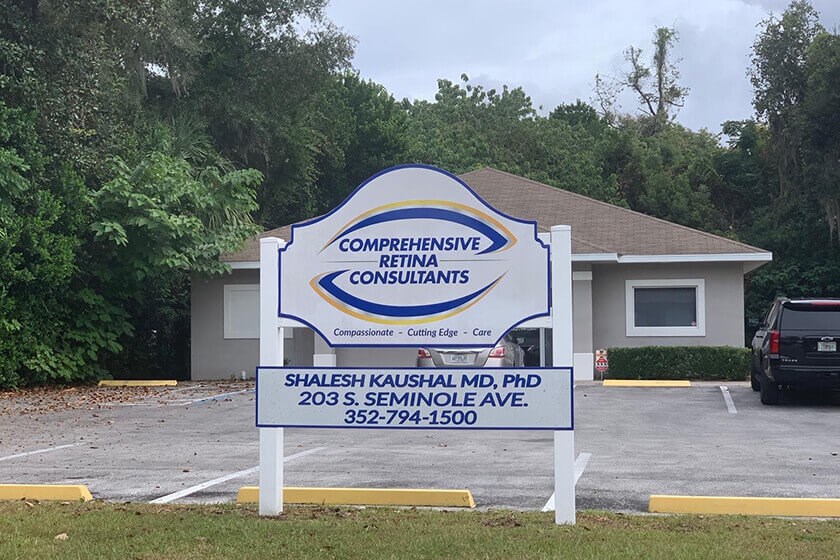
203 South Seminole Avenue
Inverness, FL 34452
(352) 794-1500
Gainesville Location

The Villages

Please fill out this form and we will get you scheduled.
What Our Patients Are Saying
★★★★★
“Dr. Kaushal is highly knowledgeable and personable. I have trusted my vision to his excellent care for many years.”
B.B.
★★★★★
“He is the best there is. He has treated me for almost a year. I don’t mind waiting when I have the best doctor and he is working to help his patients.”
S.T
★★★★★
“If you have an eye condition and want to preserve the vision you have, then Dr. Kaushal and his staff are the best you can find.”
S.T

Expert Care for the Health of Your Retina
If you are seeking a retina specialist to diagnose and treat your retinal condition, we invite you to browse our reviews and read about what our patients have to say about Dr. Kaushal, our staff, and our advanced treatments.